Places Beyond Physical Spaces: How Place Branding Transcends What’s On A Map

What turns a location into a place where people want to put down roots and stay? Sometimes, it’s not a building or a boundary, but a well-designed space for connection.
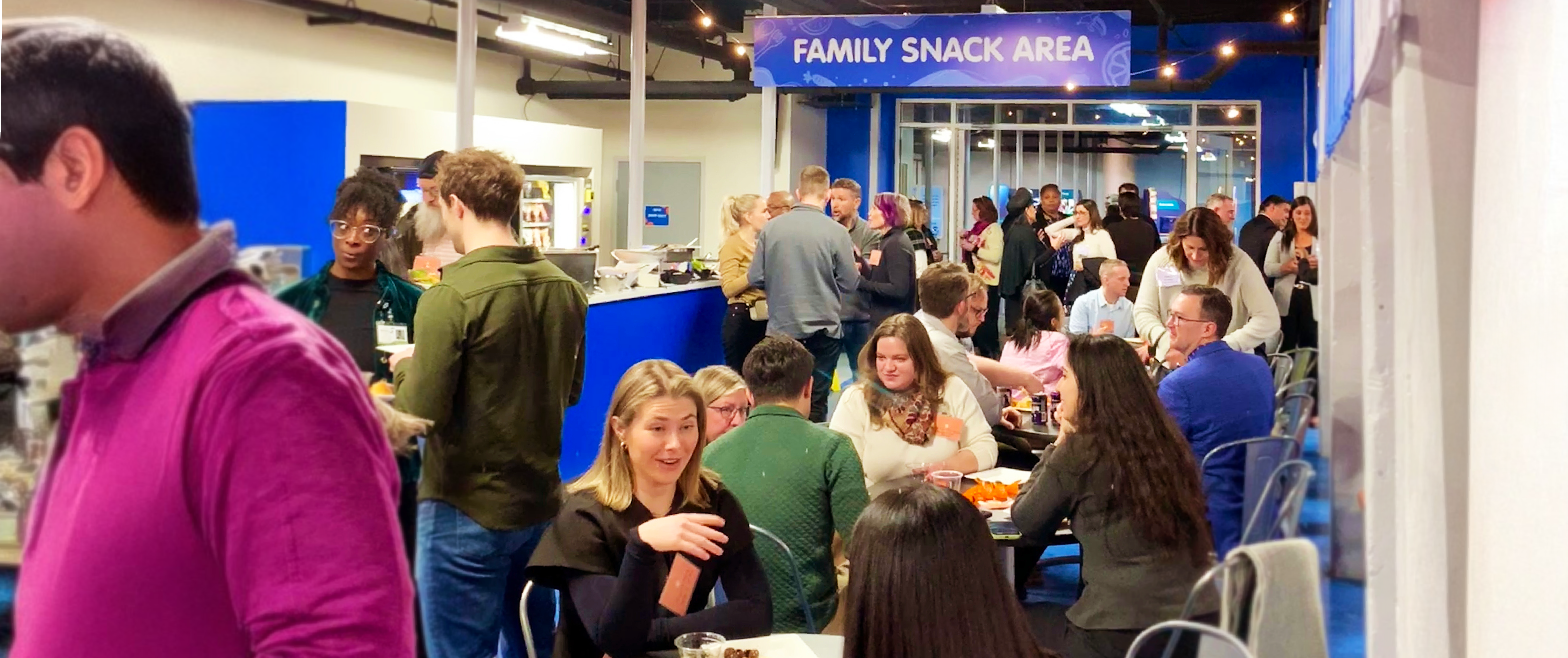
Last week, new Michigan State University faculty and staff connected with long-time Lansing-area residents at Common Thread: an evening focused on something that is not often prioritized in relocation efforts — belonging. Hosted by Lansing 5:01 in partnership with MSU, Redhead provided marketing strategy and design support for an event that was intentionally not a traditional networking mixer, but instead something both simpler and more ambitious: a place to help newcomers build real relationships by identifying common threads through shared interests, values, and life beyond work.
The result was immediate and tangible. In just a couple of hours, attendees formed connections with kindred spirits from different states and countries, discovered new local gems to explore, and began building the kinds of personal ties that turn a new job into a long-term commitment to a community. Common Thread didn’t just introduce people to Greater Lansing: it helped them feel at home in it.
That’s what place brands look like when they move beyond physical spaces.
The places that shape us aren’t always cities on a map. They are events, campuses, cultural spaces, or community hubs where we forge bonds and establish a positive personal association. Place brand positioning truly lives not in geography alone, but in the experiences and emotions tied to a shared space.
Defining “Place”
At its core, positioning a place brand is about shaping perceptions and defining identity for any shared space where community connection happens. To cite our own definition, this is brand positioning that fosters a sense of identity and pride in a physical space where people live, work, or visit — and also where they return, participate, and invest emotionally.
Place brand management isn’t limited to postcards and billboards. It includes the experiences, behaviors, stories, and values that come together to create meaning. In other words, it’s about the lived experience behind a place’s identity.
Events like Common Thread are places in this sense. They create a temporary but powerful shared space: one where people feel seen, welcomed, and connected. That feeling resonates long after an event like this ends. It carries forward into how people talk about Lansing, show up for it, and choose to stay.
More Than a Pin on a Map
A “place” could be:
- A university campus where generations of students form lifelong bonds
- A cultural institution that anchors civic life, like a museum or concert hall
- A park or coffee shop that serves as a third space
- A festival, event, or community activation that lives in people’s memories
These places are rooted in shared experience. A campus isn’t just ivy-covered buildings; it’s traditions and personal milestones. A concert venue isn’t just a stage; it’s collective joy and cultural memory. A place is a feeling, and its brand both reflects and reinforces that emotion.
This distinction matters. Tourism marketing, while certainly a critical part of place branding, focuses on short-term visitation. Place brands shape long-term identity, quality of life, and community attachment. They speak to people who live, work, and invest in a place, not just those passing through.
Quantifying Place Branding’s Impact
Believe it or not, it can be tricky to tie a quantitative metric to a place’s feeling. Still, the broader view of “place” has real impacts. Research shows that place perception directly influences economic results, and accounts for:
- 23% of tourism receipts
- 37% of outside investment
- 22% of net migration of new talent to a location (Bloom Consulting, 2024)
How people (from first-time visitors to long-time residents) think and feel about a place shapes critical outcomes like investment, talent attraction, and community vitality.
At Common Thread, seemingly random conversations about books, music, and our favorite hidden gems weren’t incidental. They were the work. A piece of a broader, intentional effort to communicate Lansing not as a location on a map, but as a place. A community. A support system. That’s the power of positioning place brands: creating the conditions for connection, so people don’t just arrive somewhere, they belong.
P.S. In honor of Common Thread taking place at Lansing gem Impression 5 Science Center: Would you rather have a chat with a new friend inside the human-sized bubble or the giant mouth? Let us know in our very formal survey.